WHEEL OFFSET VS BACKSPACING
What’s the difference between wheel offset and backspacing?
Measured in millimeters. The distance from the wheel’s centerline to the mounting surface. Controls how the wheel sits inside the fender.
Measured in inches. The distance from the mounting surface to the inner edge of the wheel. Determines clearance for suspension and brake components.
Why this matters more in 2026
Decoding the Math: Millimeters vs. Inches
WHY TWO MEASUREMENT SYSTEMS EXIST
- Offset (mm): The standard for modern, precision-engineered vehicles.
- Backspacing (inches): Widely used in truck, off-road, and custom wheel fitment.
OFFSET EXPLAINED
POSITIVE OFFSET (+)
The mounting surface sits closer to the outside of the wheel. Common on modern sedans, luxury vehicles, and European platforms.
Negative Offset (–)
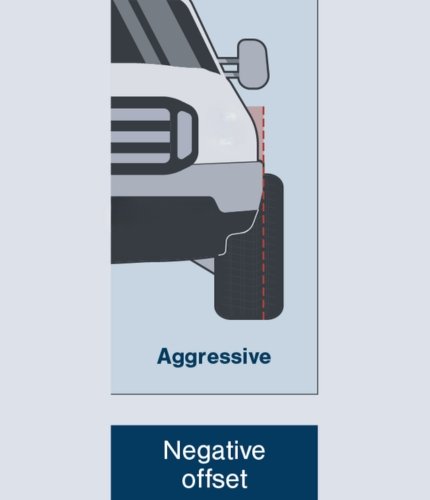
The mounting surface moves toward the inside of the wheel. Common on trucks, off-road builds, and widebody cars.
Zero Offset (0)
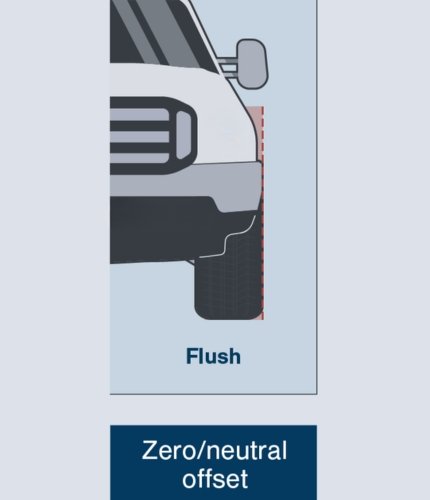
The mounting surface sits exactly at the wheel’s centerline. Best for classic builds and square-body trucks.
Why Offset and Backspacing Matter for Your Build
Scrub Radius
Offset directly impacts steering weight, road feedback, and stability. Too much change can make your steering feel twitchy or unstable at highway speeds.
Brake Clearance
Backspacing determines whether your wheel clears big brake calipers. A wheel with the wrong specs may hit the caliper face or require spacers.
HOW TO MEASURE YOUR CURRENT SETUP
- STRAIGHT EDGE
- FLAT SURFACE
- TAPE MEASURE
- PENCIL/PAPER
1. Remove the wheel and lay it face-down on a flat surface.
2. Place the straight edge across the back lip of the wheel.
3. Measure from the mounting pads to the straight edge.
4. Record the measurement in inches. This is your backspacing.
5. Find Offset: Measure total width, divide by two for centerline, convert backspacing to mm, and subtract centerline distance.
FINAL THOUGHTS: BUILT IT RIGHT THE FIRST TIME